On human agency, selective morality, and the social currency of technological outrage.

In the name of preserving our right to think, we are increasingly being told what to think. In the name of protecting creativity, we are being instructed how to create.
“AI is bad. Full stop.” “Stop using AI. Use your brain.” “AI is destroying the environment.” “AI will take your jobs.”
Across social media, complex questions of employment, intellectual property, environmental responsibility and human cognition are reduced to moral absolutes.
The conviction is striking. The intellectual inquiry and proposed solutions, considerably less so.
Artificial intelligence deserves scrutiny. So does the quality of the discourse surrounding it.
Whatever happened to personal responsibility?
The emergence of a technology does not create an obligation to use it. An individual's decision to reject it does not establish a moral obligation for everyone else.
A novelist may enjoy writing in a Moleskine notebook. A painter may find pleasure in mixing pigments and the sound of a brush against canvas. Another artist may find generative technology an extraordinary way to explore the imagination.
These are all legitimate creative choices.
Yet we are witnessing a form of human-washing: the positioning of human production as an automatic credential of ethical and artistic superiority.
Neither human authorship nor technological assistance guarantees artistic merit. The work deserves evaluation on its own terms.
The same principle applies to intellectual dependency. A language model can be used to avoid reading a difficult philosophical text or to investigate it, explore competing interpretations, and challenge one's understanding.
The technology is identical. The intellectual ambition is not.
Companies and educators have responsibilities, but neither absolves individuals of accountability for their own intellectual habits. The existence of a shortcut does not obligate us to take it.
If preserving independent thought is genuinely our concern, perhaps we should begin by exercising it.
Whose jobs ARE GONE, exactly?
Artificial intelligence is taking our jobs. Which jobs? In which industries? Are we discussing unemployment, declining commissions, wage suppression, task automation, or projected displacement?
In 2025, the International Labour Organization estimated that one in four workers globally occupied a role with some exposure to generative AI. Occupational transformation, rather than wholesale replacement, was identified as the more likely outcome for most workers.
Exposure to AI is not unemployment.
Occupational obsolescence is hardly an invention of artificial intelligence. Desktop publishing displaced typesetters. Personal computers rendered typing pools largely redundant. Digital photography transformed an entire industry built around film processing.
The speed of AI development may present a different challenge, but the need to adapt is not new.
Rather than repeatedly telling creative professionals that their livelihoods are disappearing, why not help them identify transferable skills, emerging disciplines and alternative business opportunities?
Adaptation requires effort, resources and institutional support. Declaring a profession dead is considerably easier than participating in its reinvention.
The inconvenient history of creative ownership
The exploitation of creative labor did not begin in 2022. This has been happening for some time.
Fashion houses have appropriated Indigenous designs. Retailers have reproduced independent artists' work. Photographers have seen their images monetized without permission. Social media has made unauthorized reproduction and distribution of our work remarkably easy.
Artificial intelligence adds a new dimension to an old problem: consent, licensing, and compensation deserve serious scrutiny. That’s all.
But condemning individuals for experimenting and exploring with generative imagery does not establish transparency in training datasets, negotiate licensing agreements, or compensate artists.
Historical exploitation does not excuse contemporary exploitation. It does, however, expose how inconsistently we have defended creative ownership.
Direct the inquiry toward those acquiring and commercializing the material, while holding creators accountable for how they use it.
AI is bad for the environment
Data centers consume electricity and water. According to the International Energy Agency, they accounted for approximately 1.5 percent of global electricity consumption in 2024. AI is expected to drive substantial growth in that demand.
Yet Instagram, streaming services, cloud storage and online marketplaces also depend upon data center infrastructure. The platforms through which we express our environmental outrage are themselves participants in the environmental equation.
Meanwhile, we remain consumers of fast fashion, disposable plastics and frequently replaced electronics. Even seemingly sustainable alternatives involve environmental trade-offs.
None of this excuses the environmental impact of artificial intelligence. It does challenge the convenience of identifying a single technological villain.
If water consumption is the concern, demand transparency from data center operators. Challenge infrastructure decisions in water-stressed communities. Advocate for enforceable environmental standards.
Direct the scrutiny toward AI companies and those with the authority to change the outcome.
Outrage as social currency
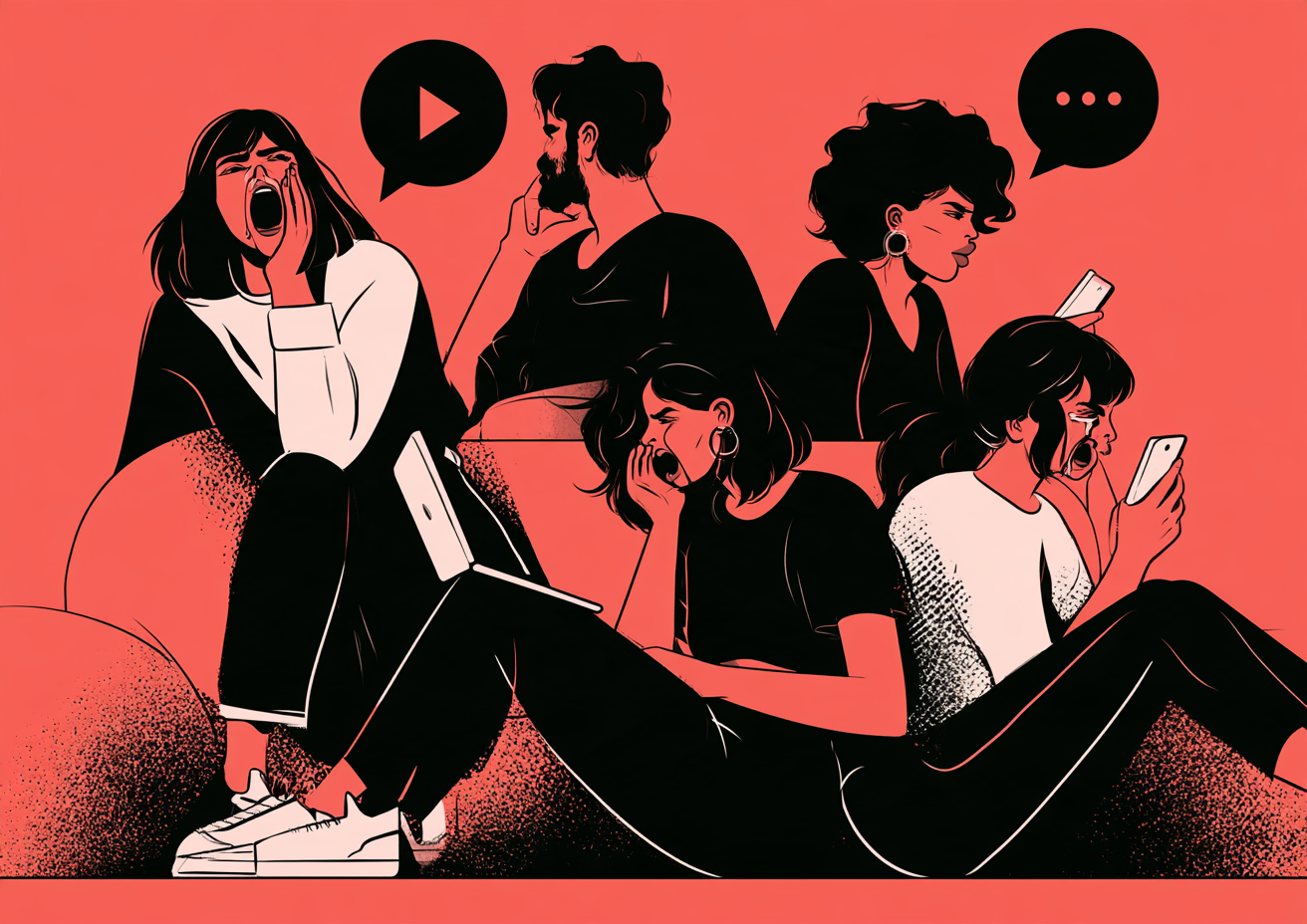
Social media has made moral certainty remarkably convenient. Research requires effort. Condemnation requires a sentence.
A 2021 study published in Science Advances found that positive social feedback reinforced subsequent online expressions of moral outrage.
When moral declarations generate visibility and affirmation, expressing a conviction can become more rewarding than investigating it.
Recently, through /Altered District, I shared the intricate embroidery and beadwork of a traditional maker. The artist requested its removal, apparently concerned about its association with AI. By the time I discovered the message, I had been blocked.
The artist had every right to request its removal. What interested me was the apparent incompatibility between appreciating traditional craftsmanship and being interested in generative creativity.
Since when did curiosity require allegiance?
At /Altered District, we are interested in creative processes, artistic intentions, and the imagination behind the work. Technology is part of that conversation. But technology is not its entirety.
From outrage to accountability

Artificial intelligence exists, and we need to accept that it's here to stay. Of course, this will have major implications for many of us. But we need to do something, not post on social media about how bad things are. That’s just not good enough.
Let's normalize posting helpful speech instead of aggressive posts against AI, because this isn’t helping anyone.
If employment is the concern, then we need to help people identify opportunities. If environmental impact is the concern, demand corporate accountability. If creative ownership is the concern, advocate for legal protections. Substantiate claims before publishing them. Offer solutions rather than amplify anxiety.
Moral conviction is not a substitute for action. The measure of our humanity lies in the judgment we exercise, the responsibilities we assume, and the freedom we afford others.
Sources & Further Reading
International Labour Organization (2025). Generative AI and Jobs: A Refined Global Index of Occupational Exposure. ILO Working Paper 140.International Energy Agency (2025). Energy and AI. Paris: IEA.Brady, W. J., McLoughlin, K., Doan, T. N., & Crockett, M. J. (2021). How Social Learning Amplifies Moral Outrage Expression in Online Social Networks. Science Advances, 7(33), eabe5641. DOI: 10.1126/sciadv.abe5641.