Creative ‘Flow’ & AI
This is about the psychology of creative immersion, the pleasure of discovery, and the difficulty of knowing when to stop.
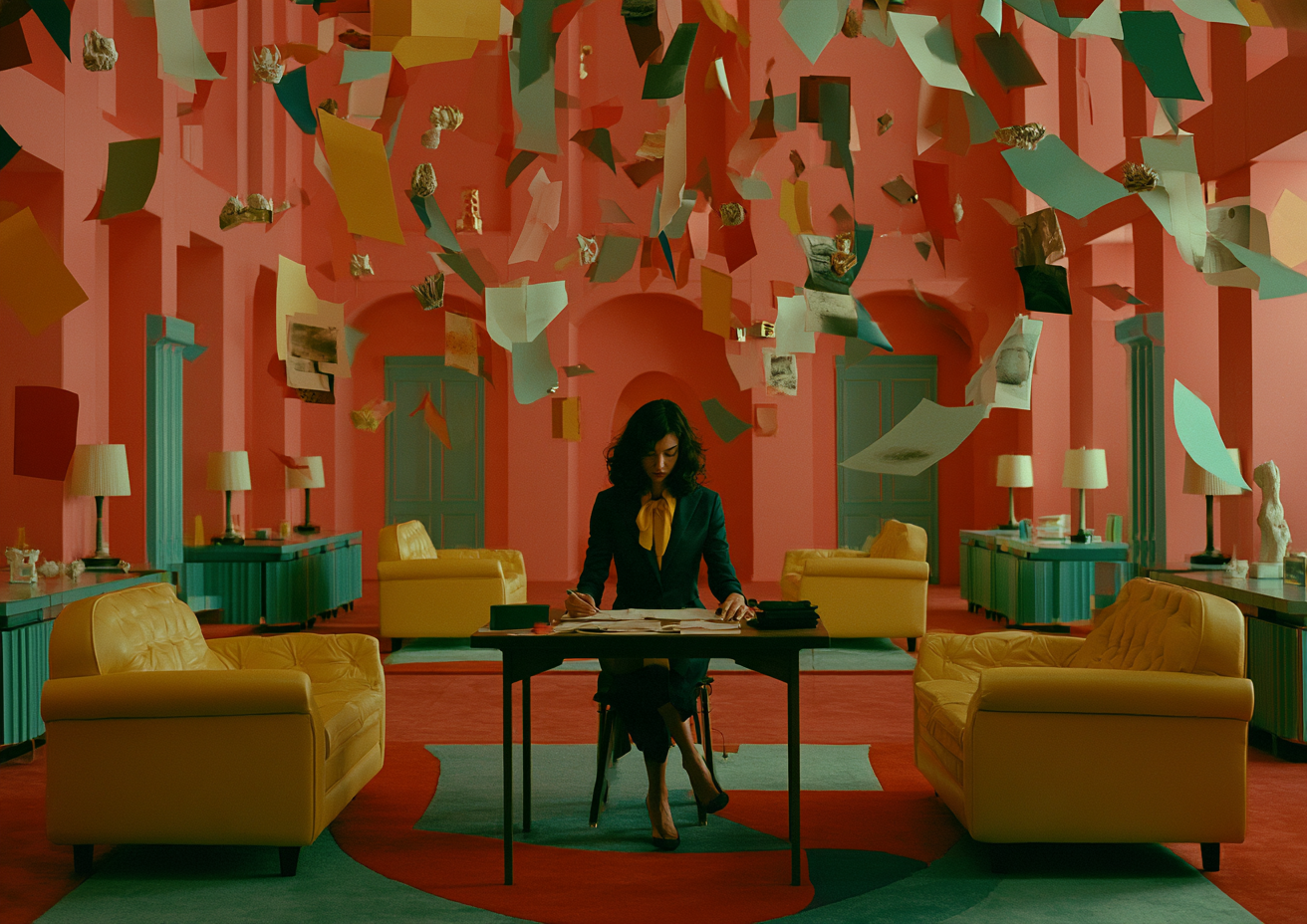
Lost in the Process
I first learned about the concept of flow during graduate school at Parsons School of Design, while pursuing my MFA in Design and Technology. One of my professors introduced me to psychologist Mihaly Csikszentmihalyi’s book, Flow: The Psychology of Optimal Experience. It described many processes and activities I’d experienced before but didn't have the right words to define at the time.
Fast forward to now, I hadn’t anticipated how relevant flow would become to how we create with technology today, specifically generative AI.
For those who aren’t aware, Csikszentmihalyi spent years studying what makes certain experiences deeply absorbing and intrinsically rewarding. He observed that people engaged in activities ranging from painting and playing an instrument to sports and scientific research sometimes enter such intense concentration that their awareness of time and distractions disappears.
He called this experience flow.
I interpreted Flow as the pleasure of doing something we enjoy, and when we become fully immersed in a process, all done that at the same time.
It tends to emerge when an activity's challenge or actions meet our ability to respond. This happens when we have a sense of direction and the feedback we receive lets us continually refine what we do. The entire experience can be demanding, and even frustrating, depending on how precise we want to be.
But our attention stays fixed because the activity itself becomes rewarding, whether we realize it in the moment or not.
Anyone can experience flow. It’s not reserved for specific activities, skill sets, expertise, or creative individuals. For example, if someone likes to cook, they may enjoy the sound of a knife hitting the chopping board. Their eyes focus on the chopping and on seeing the beautiful results. Meanwhile, a boxer training with his coach hits the pads in a rhythmic, fast, intuitive motion. They never miss a beat when their coach calls out combinations or holds up a pad a certain way, and they make no mistakes because they are focused.
That’s a state of flow.
There is so much more to Csikszentmihalyi’s research than I’d like to explore here. But I encourage anyone interested in creativity, process, or the psychology of human experience to read the book.
The question I want to examine now is: What happens to flow when generative AI enters the creative process?
Our relationship with generative AI
Anyone who spent a considerable amount of time creating in generative AI may recognize this particular sequence of events:
We all start with an image in mind, or a mood.
We translate that into words, descriptive language, with sets of adjectives.
We enter that into a generative model and wait for the result.
Then discover that the machine has interpreted our intentions in a way that’s either surprisingly accurate, completely unexpected, or even idiotic.
There’s a particular satisfaction when the image resembles what we had imagined. But another kind of excitement comes when it doesn’t, especially when it shows us something unexpected. Something we never really thought of, but the result introduces a new possibility we hadn’t considered.
We iterate again, adjusting a term or phrase, experimenting with references, reconsidering the lighting. Our original idea may remain intact somewhere in our minds. But we sit there and let images evolve. One result suggests another, leading us to a different direction and on and on.
Hours pass. Then we look up from our screen and realize we’ve generated an extraordinary number of images. Then balk at 1,900 squares of options lined up neatly on a grid. We are now faced with the equally demanding task of deciding which ones are worth keeping and match our original thought.
All Artists are Different
As /Altered District’s founder and editor, I’m always curious about how artists describe their creative processes. Preferences vary for each creative, of course, because it’s all about the individual’s original intention. Some are pragmatic and begin with a clearly defined concept. Others make moodboards, while others prefer to discover their direction through experimenting with generative AI.
Some enjoy generative images and the model’s unpredictability, while others work to gain greater control over the results they want.
“When I get deep into a creative flow, the generative aspect of AI starts to interact with my experiments - I may see a different visual idea I want to explore, and I organically follow that.”
- Steve Powell from /Altered District Issue No. 3
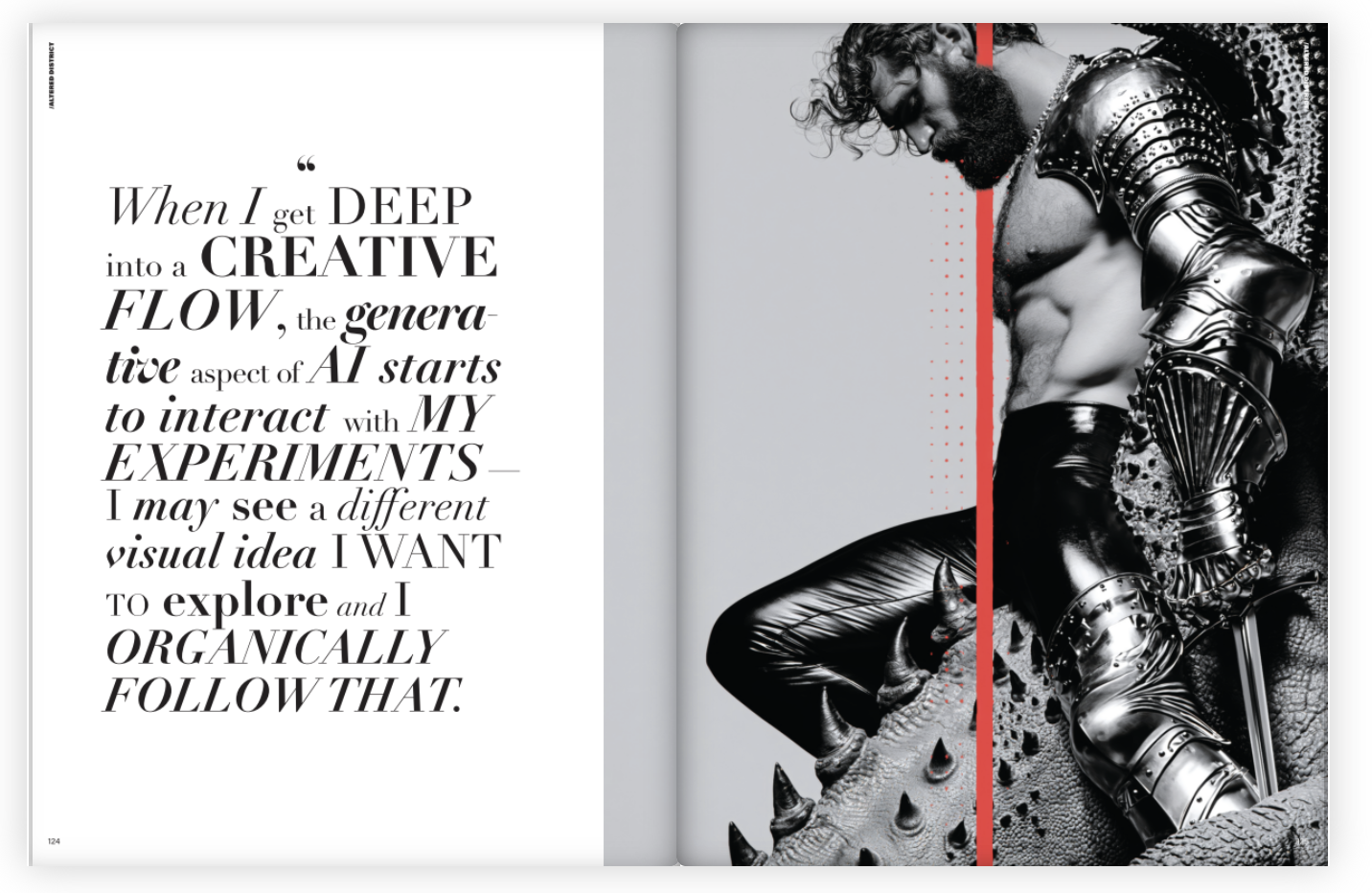
Not all creatives share a standardized method, but they share an ongoing relationship between their original intended image and the results they receive.
One contributor described how a new visual idea can emerge during experimentation, prompting them to follow an entirely different direction. It’s almost like they experience generative AI as a creative partner who they can bounce ideas off and collaborate with.
“I also set loose constraints to guide the work, leaving room for experimentation.”
- Bianca Wolf from /Altered District Issue No. 2
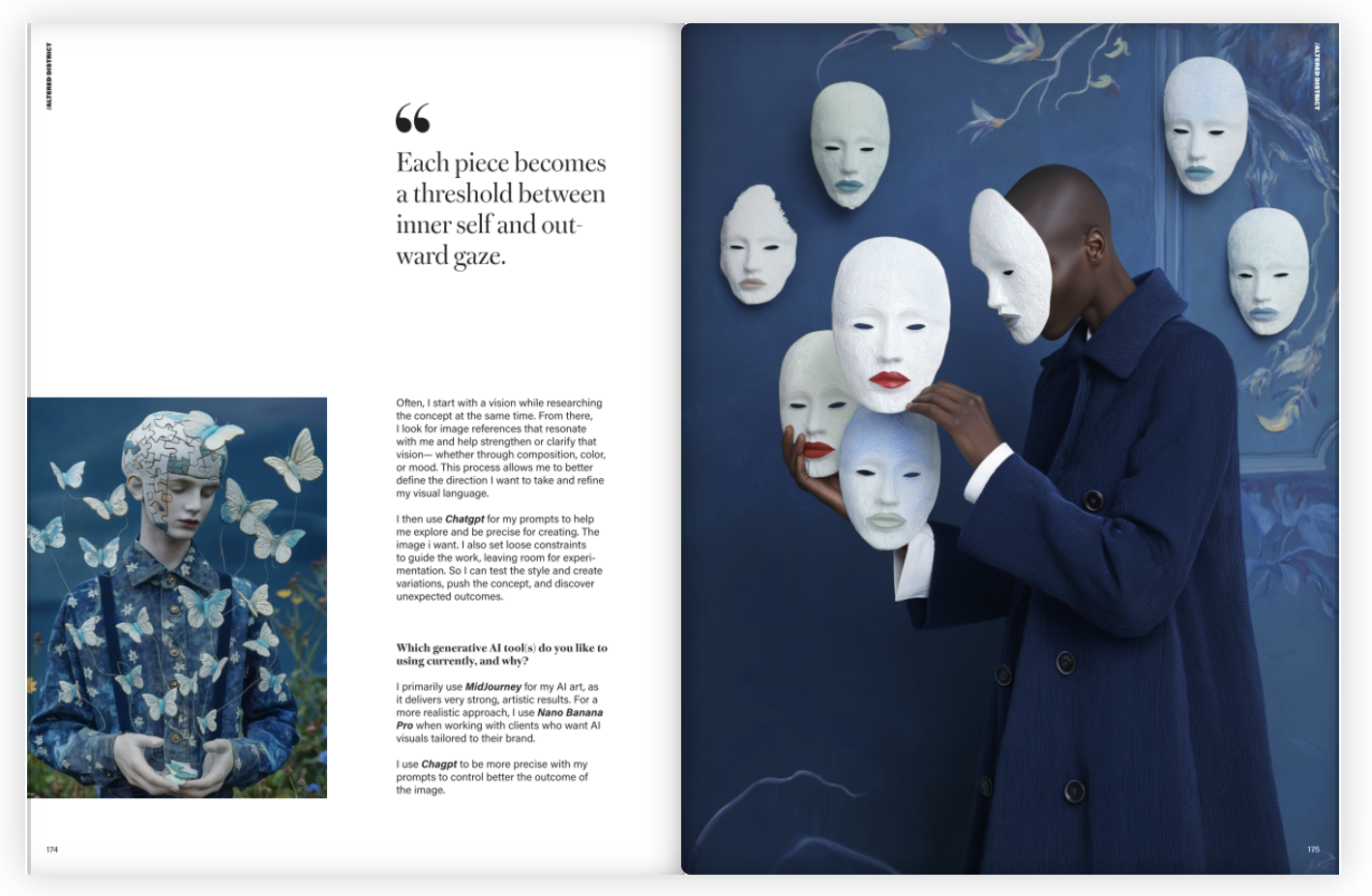
These accounts and many more suggest that creative immersion exists and may take different forms depending on the artist.
The Allegory of Endless Possibility
There’s, of course, that part of our process of being endlessly entertained by what a machine can produce. Yes, we can get caught up in exploring and possibly pushing the model’s interpretation till we run out of credits.
There’s always that other variation we’re dying to try, a different art direction, and another unexpected result waiting to be discovered. That abundance of choice can be exhilarating, but it can also make it difficult to recognize when an idea has reached its point. Generative AI makes it remarkably easy to keep going, until our subscription allows us.
But this is where I think editing becomes especially important and necessary to our creative process with generative AI.
After 1,900 images (and with no more credits), it’s now a matter of what deserves to be the final image. We try to return to our original thought as we make judgment calls while examining all that emerged from our endless experimentation.
“Generative tools flood you with options, so every decision needs purpose.”
- Natalie DeGroot from /Altered District Issue No. 1 Vol. 1
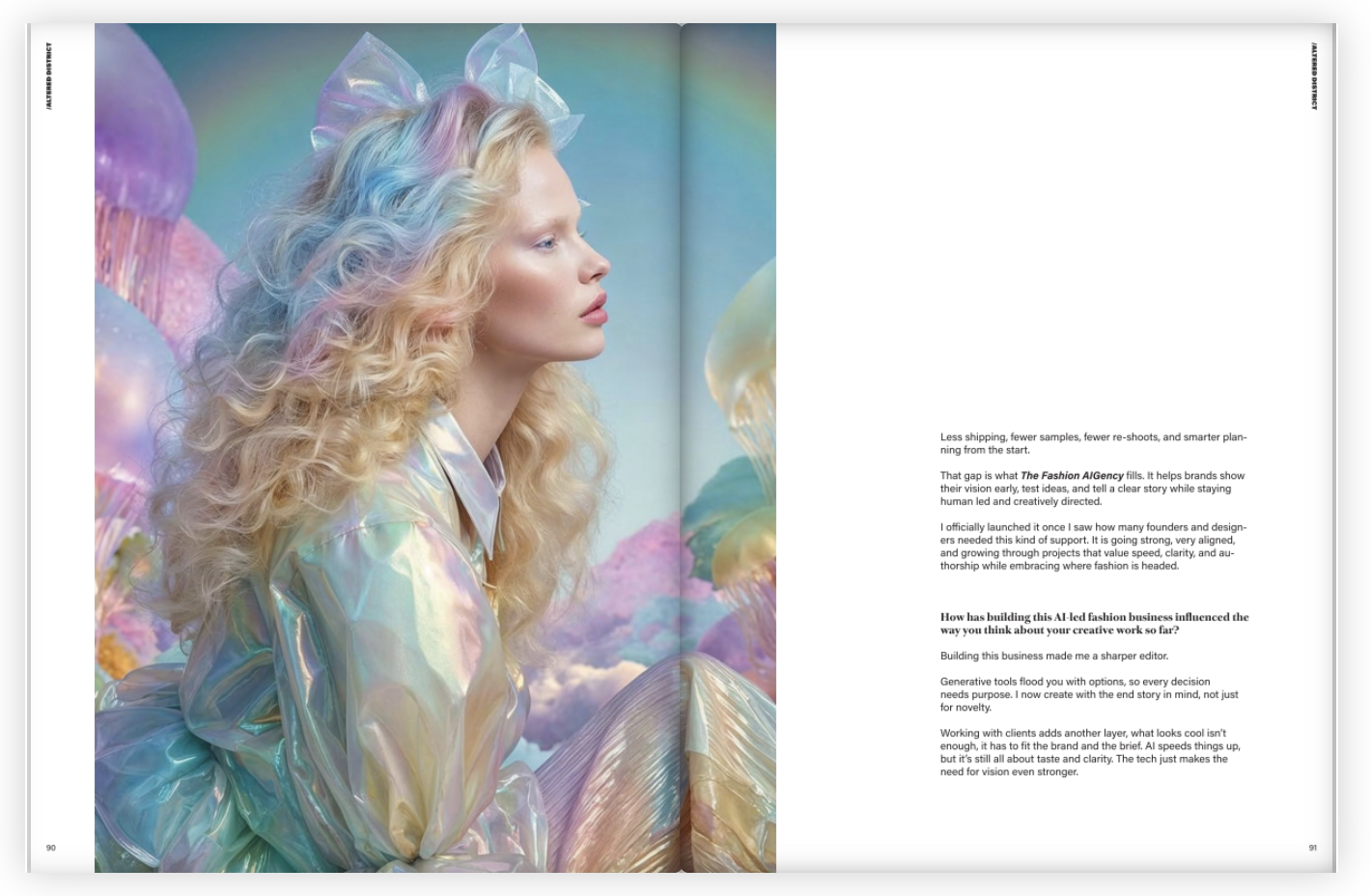
Perhaps the most demanding creative decision in this era of generative AI is knowing when to stop experimenting and start selecting the true image.
Our new creative experience
Csikszentmihalyi’s work wasn’t about generative AI, and I wouldn’t suggest that every absorbing prompting session meets his definition of flow. His research helps us think about the relationship between attention, skill, challenge, and the satisfaction we get from engaging deeply with an activity.
Generative AI has changed how we conceptualize images, but it has also introduced new forms of feedback into our creative process. We can move quickly and conveniently between an idea and its visual interpretation. We can do this with little worry about the logistical costs we would traditionally face. This gives us the freedom to reconsider our original ideas quickly and explore new possibilities.
For some artists, this freedom means joy or delight in experimenting and discovering. For others, it creates new demands for greater precision, restraint from rerunning, and tasteful judgment in editing.
What interests me is this human experience of becoming absorbed in this new level of creative flow while working with generative AI. My conclusion is that flow may still exist even as our tools have evolved.
