There will be slop
Notes from Curating and Creating /Altered District
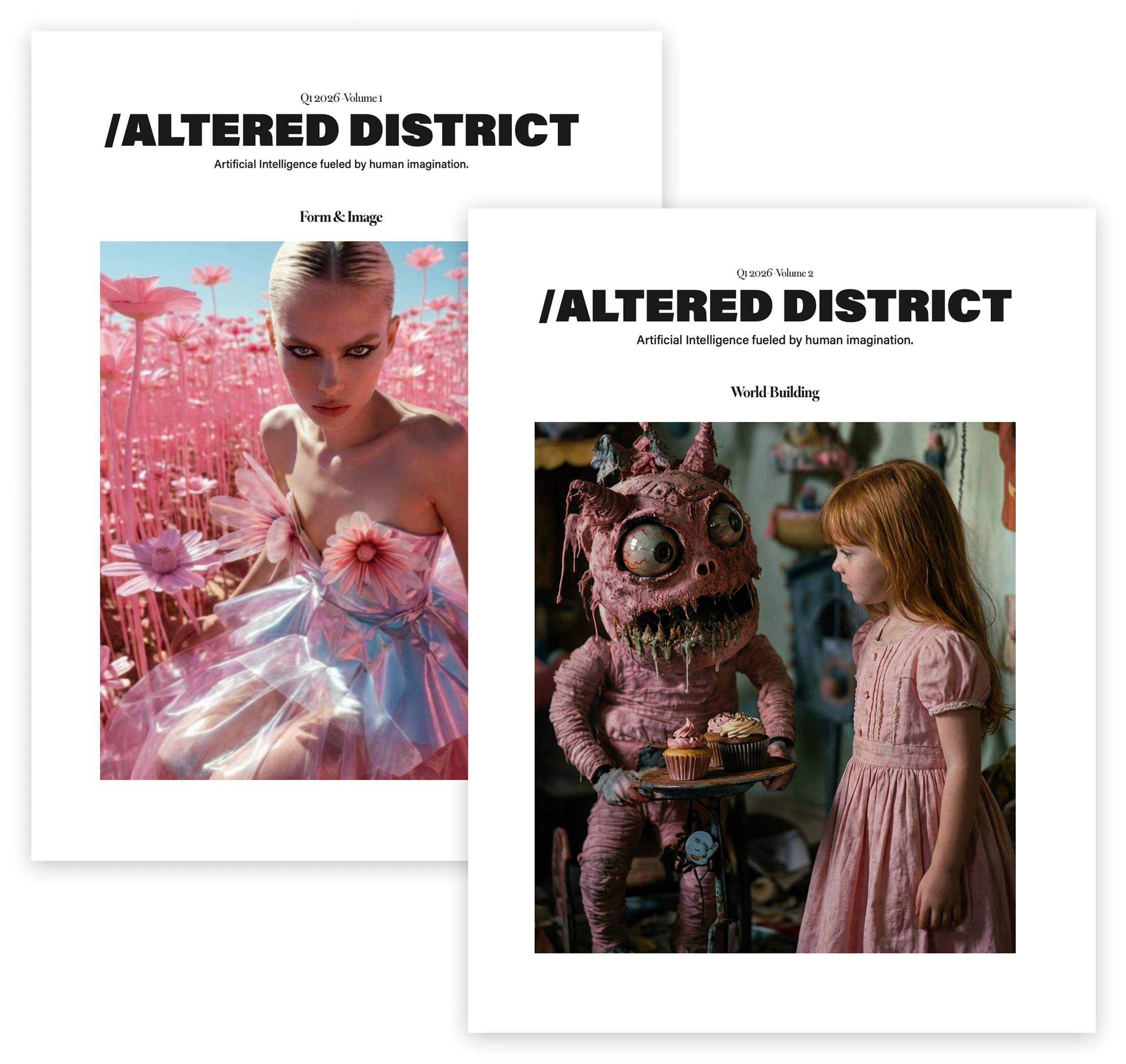
There Will Be Slop
There will always be slop.
Not because of AI, but because of what happens when the cost of making something approaches zero. When tools remove friction and constraints, any output expands. And when output expands, so does everything that lacks direction or purpose.
This isn’t new. We’ve seen it already.
The first wave showed up in AI-generated images, an overwhelming volume of visuals, many of them technically impressive, but often lacking coherence, imagination, or a clear point of view. It became easy to generate, but harder to recognize what was actually worth keeping or paying attention to.
Now a second wave is emerging, this time in software. With new platforms like Lovable, anyone can build functional applications quickly. The barrier to entry has dropped again. But the pattern remains familiar: things are being made because they can be made, not because they need to exist.
The process of making has changed. The outcome hasn’t.
AI slop, in this context, is what happens when output is produced without judgment, selection, or true human purpose.
What Determines the Difference
In curating work for /Altered District and speaking with creators, I began noticing patterns in what separated work that held attention from work that didn’t.
At first, the distinction seemed obvious.
Many of the most compelling images came from individuals with backgrounds in the arts, design, fashion, and advertising. Creative directors, art teachers, and individuals trained in composition, storytelling, shapes, and color. They brought a developed eye, and it showed.
It felt reasonable to assume that this would always be the dividing line: creators who have taste and style vs those who just randomly generate images because they can.
But that assumption didn’t hold.
One of the creators I interviewed came from a software engineering background, without formal artistic training. What stood out in his work wasn’t technical execution, but a thought-provoking commentary. He does draw heavily from cinema, moving across genres, sometimes dramatically, and yet the work never feels random. There is structure, pacing, lighting, and a consistent thought that make the output feel deliberate.
That observation shifted the model.
It wasn’t training alone. It was the fact that he wanted to explore a social commentary and tell a story about it through a series of images.
Where Slop Actually Comes From
Across different creators, another pattern became clear.
The difference wasn’t simply skill, lack of imagination, or even taste in the traditional sense. It was whether someone could stand behind what they made.
Creators producing weaker work tended to rely on having access to generative AI. When asked about their process, their decisions, or why something worked, there was very little to articulate. The output existed, but the reasoning behind it didn’t.
In contrast, the stronger creators, regardless of an artistic background, could explain:
Why did they choose a direction
What they were trying to evoke
What they removed or refined
How is one image related to the next
They weren’t just generating mindlessly because it’s fun and easy. They were deciding.
And that distinction shows up in the work.
Slop isn’t defined by the tool or even the medium chosen. It emerges when there is no clear creative voice guiding what gets made, and no true human purpose shaping what gets kept.
A Shift in What Defines a Creator
There is another shift happening alongside this.
Traditionally, we recognized creators by a consistent visual style. A painting by Claude Monet carried a distinct signature. A photograph by Bruce Weber is immediately distinguishable from one by Annie Leibovitz. Style was the identifier and was also the reason why creators were hired or commissioned.
With generative tools, that constraint is beginning to dissolve.
Some creators can now move across entirely different visual languages, from one aesthetic to another, without losing coherence. A creative director I observed shifts between styles fluidly, yet the work remains evocative and complete. It doesn’t feel scattered or random. It feels expanded.
What stays consistent is the decision-making behind it.
The creative voice is still there. It’s just no longer tied to a single visual signature that branded a creator.
Consistent Common Denominator
AI expands what can be made, and this technology is not going away anytime soon. But it doesn’t determine what should be made.
That responsibility hasn’t changed. If anything, it has become more visible.
When production was constrained, judgment was harder to isolate. Now that generation is easy, the difference between work that resonates and work that doesn’t is more exposed.
Across editorial curation, product design, and AI systems, the same pattern holds: outputs can be generated. But the value comes from what is chosen, to be imagined, and carried forward.
Conclusion
There will be more random images that are forgettable. There will be more random apps that might be useful. There will be more things that exist simply because they can and are easy to make.
But the presence of more output doesn’t change where quality and value come from.
The tools can generate endlessly. They cannot decide what matters.
That still belongs to the creator, to their creative voice, their ability to tell a story, and their clarity of purpose.
And as those tools continue to expand, that difference will only become easier to see.
