Should prompting determine what counts as meaningful art and original creativity? Or is it because we use it to command the AI?

Desert Witches - 2024, inspired by The Cell (Midjourney V.6)
Once, I created an editorial series, Desert Witches, inspired by one of my favorite films, The Cell by Tarsem Singh. His work is an extraordinary exercise in visual storytelling, and I often rewatch his films when I’m creatively blocked. The series was meant to be my homage to Singh, whose visual imagination has profoundly influenced mine.
Then a random filmmaker took issue with it on Instagram, unleashed their wrath, and let me have it. In a comment, he criticized my series and raised familiar concerns about generative AI (genAI) and its effects on the film industry. Then went on endlessly about inauthenticity, me cheating, and no talent.
But what intrigued me was his framing: ‘just because you prompt something, you get to call yourself creative.’ That stuck with me, rent-free in my head even now. It’s those two words used in the same sentence: ‘just’ and ‘creative.’
I want to explore prompting: how the mind has always used written language to give shape to our imagination, but what happens when those words we enter become images with genAI?
In the beginning, there were writers and creatives
That filmmaker’s comment left me wondering whether we have become so accustomed to recognizing creativity only through technical execution.
Perhaps we overlook the imagination it takes to translate ideas into words. After all, writing has been a form of creative expression for millennia.
So why is writing a prompt suddenly treated differently from writing a story?
Let’s examine.
Writers:
Let’s consider a novelist, an author. They can skillfully construct an entire world through sentences without painting a single landscape or taking a photo.
Then there are the poets who can conjure an image and emotion with a few carefully chosen words.
Playwrights can imagine and write a confrontation, an intriguing plot, and a dialogue that actors bring to life on stage.
Screenwriters can conceive scenes that a director and cinematographer will eventually interpret visually. Not to mention character descriptions that casting directors will seek out, and actors will audition for.
We recognize their imagination without requiring them to execute every visual detail, and we don’t question their creativity.
But they write, use words to describe something, and formulate a story, and we consume it, getting enchanted along the way.
Creative and art directors:
In advertising, account teams usually write creative briefs or, depending on the size, the art directors do.
Briefs are written to ground the creative teams and set business expectations based on the client’s needs:
Creative briefs establish a project's purpose and define the audience, key messages, and constraints (e.g., budgets, timelines, goals, etc.) before the creative team decides what to make.
Production briefs are usually written by art directors and approved by creative directors in order to define the visual approach.
Both creative and art directors have spent decades conceiving campaigns, copy for taglines, and directing photographers or illustrators to shape visual narratives. However, if art and creative directors start exploring ideas through genAI, does their creative judgment suddenly stop counting?
If historically, written language has been a vehicle for artistic expression, what actually changes when we use written language to create images through a machine?
The bad rap
In the context of genAI, prompting is developing a bad reputation. Partly because people use words to describe several very different activities to the machine. Then backlash ranges from low-effort production to slop.
To begin: what is a prompt? It’s a cue, sometimes written or verbally meant to be assistance given by someone to help direct someone else.
For example, a parent can prompt their child to notice danger. A film director can prompt an actor to adjust their performance to a different or more intense mood. In theater, the Stage Manager usually has a Prompt Book. It's a large, heavy binder that contains a copy of the script with additional notes and pages. The Stage Manager can note exactly when to change the lighting, use a spotlight instead, change the background scenery, and so on.
Prompts within genAI are a whole new criticism and, quite frankly, an opportunity to be looked down upon. To others, prompting a machine is deceptively simple: type a few words, and the image appears. It’s true, we didn’t take a physical paintbrush, mix paint, and start applying color to a canvas. Nor did we take a camera, adjust the focus, and figure out the ISO and f-stop, then take a photo.
However, even if a creator clearly prompted specific descriptions and made tasteful editing judgments, that whole process is still overlooked. Because people will always conflate creativity, craft, and originality.
But nobody really talks about what it takes to write a prompt.
No one is framing it as another form of self-expression, whether we realize it or not. We’re not writing instructions for a machine to follow. Actually, we’re using written language to express how we imagine a scene can be. We write descriptions and think of adjectives for atmosphere, mood, composition, symbolism, and the feeling we want it to evoke.
Prompting is another creative format that uses written language.
AI creators described prompting
As the founder and editor of an indie publication dedicated to creative use of genAI, I often ask contributors to share their creative process. What do they think about before they even touch the AI? What influences their imagination and what forms their visual style? How do they translate an idea into something tangible?
Two contributors from Issue No. 2: Voice & Vision offered particularly distinct perspectives on their relationship with prompting.
Ikuo Yamamoto, an art director and visual artist from Japan, describes prompting as a way of reaching into the deeper recesses of his subconscious. Language becomes a way to access his ideas, what to experiment on, and imagery that might otherwise be difficult to articulate in everyday speech.
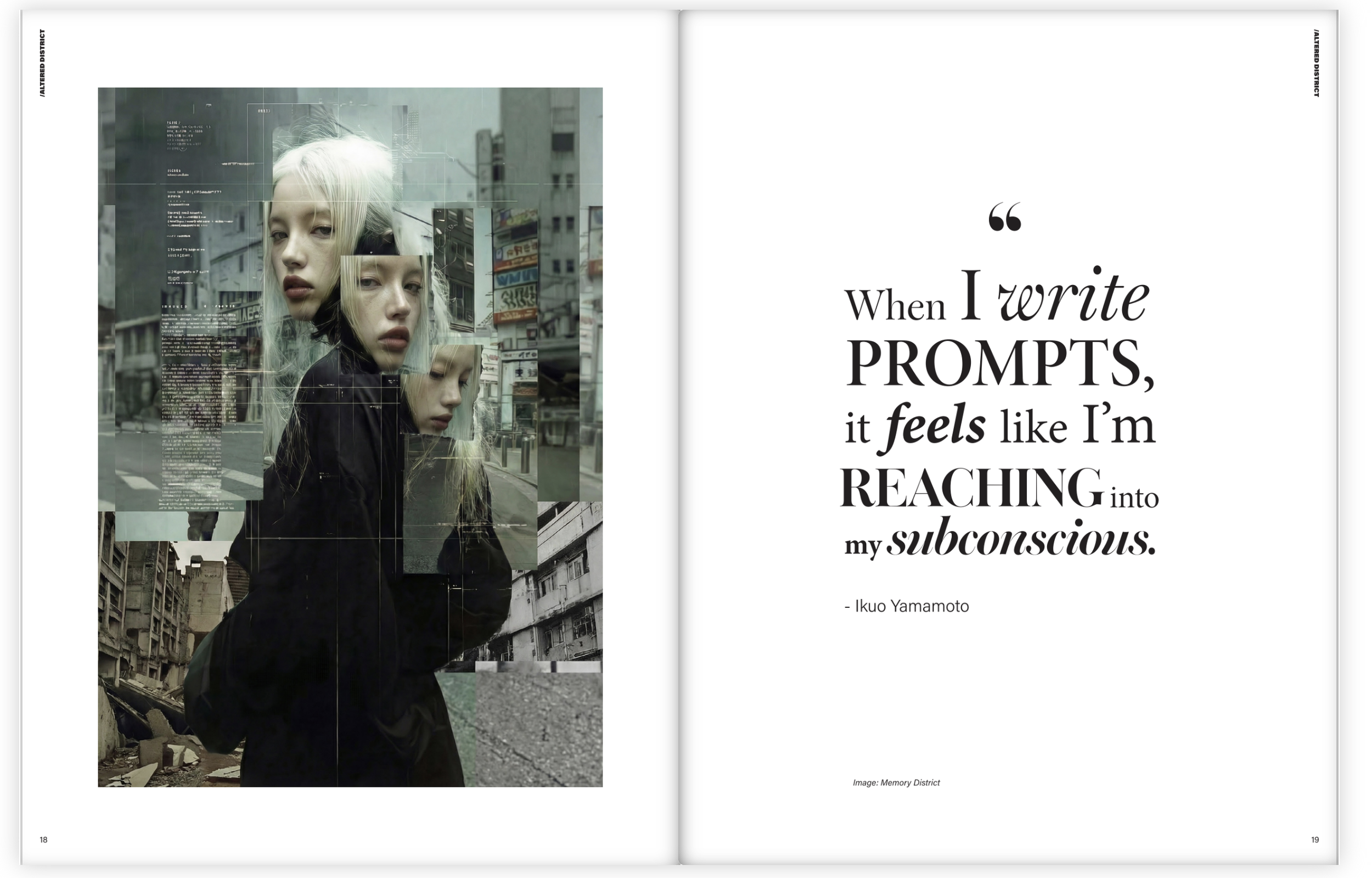
Ikuo Yamamoto - Issue No. 2 /Altered District ‘Voice & Vision’
For Nina Sabina Caballero, an award-winning creative technologist and filmmaker based in Finland, prompting resembles directing a motion picture. Rather than verbally communicating her vision to a film crew and actors on set, she translates her direction into written language.
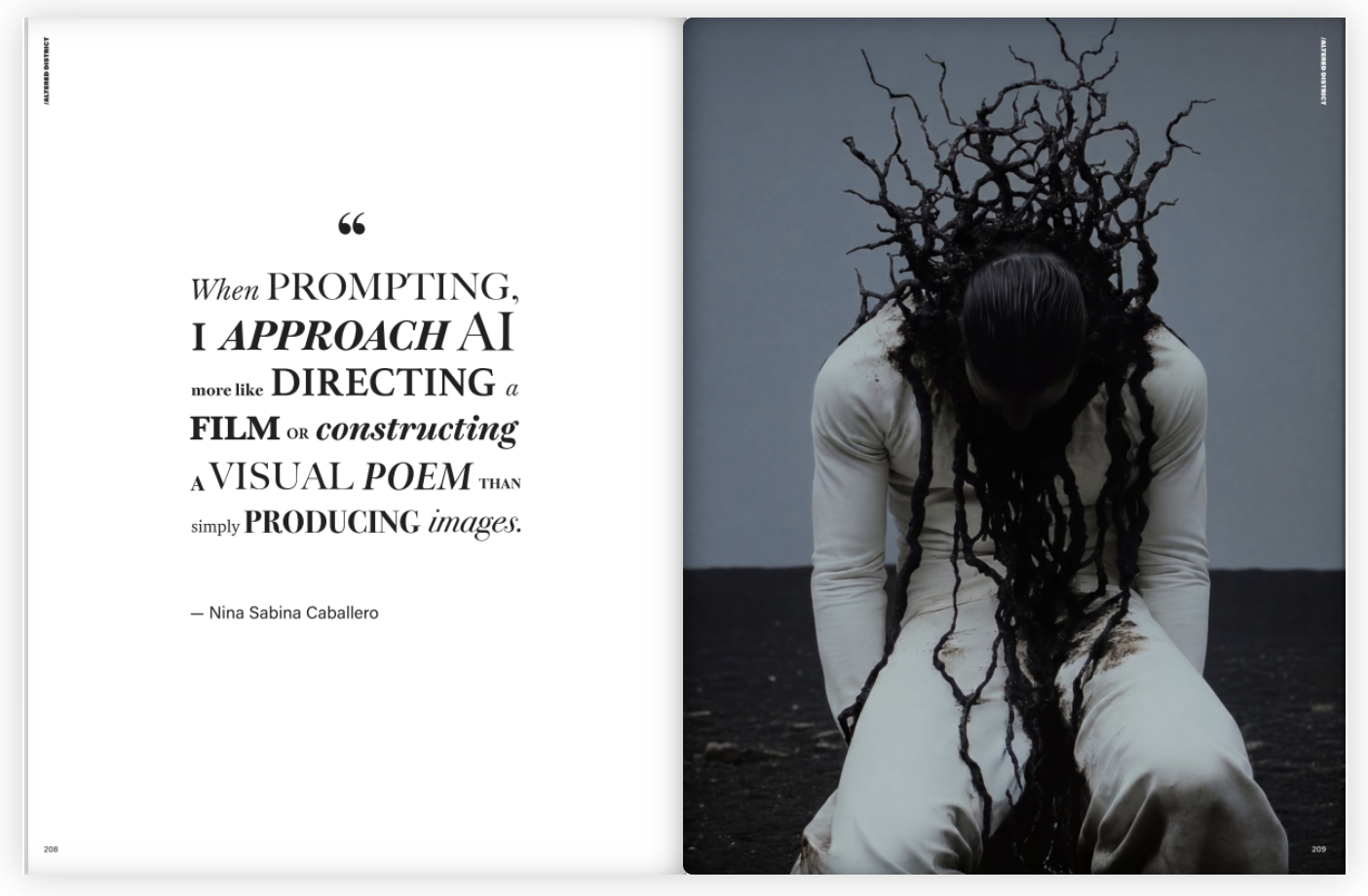
Nina Sabina Caballero - Issue No. 2 /Altered District ‘Voice & Vision’
Yes, they crafted written prompts, hit Enter, and the images appeared. They had no big studio budget to bring their visions to life, but only an idea and a compelling story they felt needed to be told. They had to draw on another aspect of their creative thinking, translating their ideas into descriptive language for the machine to respond.
I wouldn’t classify their work as cheaply done because of how they brought their ideas to fruition. Nor is it low-effort because they didn’t hire a cinematographer or stylists. Rather, their work was responsibly written.
They even review and refine the AI’s results, using taste and judgment to bring their envisioned narrative to life.
Perhaps it’s time we all acknowledge a new reality and define an important distinction. Prompting isn't just coming up with a command, typing it, and sending.
Can we finally admit that prompting is another form of creative expression?
At a high level, here’s an overview of the creative genAI process:
Everything starts with a concept, an idea, or curiosity
Choosing a visual direction in mind
Then comes the expressive writing, shifting the mind to think in words
Enter prompts for the AI to interpret and view the generated options
Followed by refinement and iteration based on the intended results
That third step is where we still have to exercise a part of our minds that no longer requires a pencil and paper, a camera, or a paintbrush. Most viewers don’t realize this. Perhaps those who think prompting is a cheap way to create something are reacting to something else entirely unrelated. Because there’s certainly critical thinking involved, it’s hardly noticed and talked about.
Conclusion
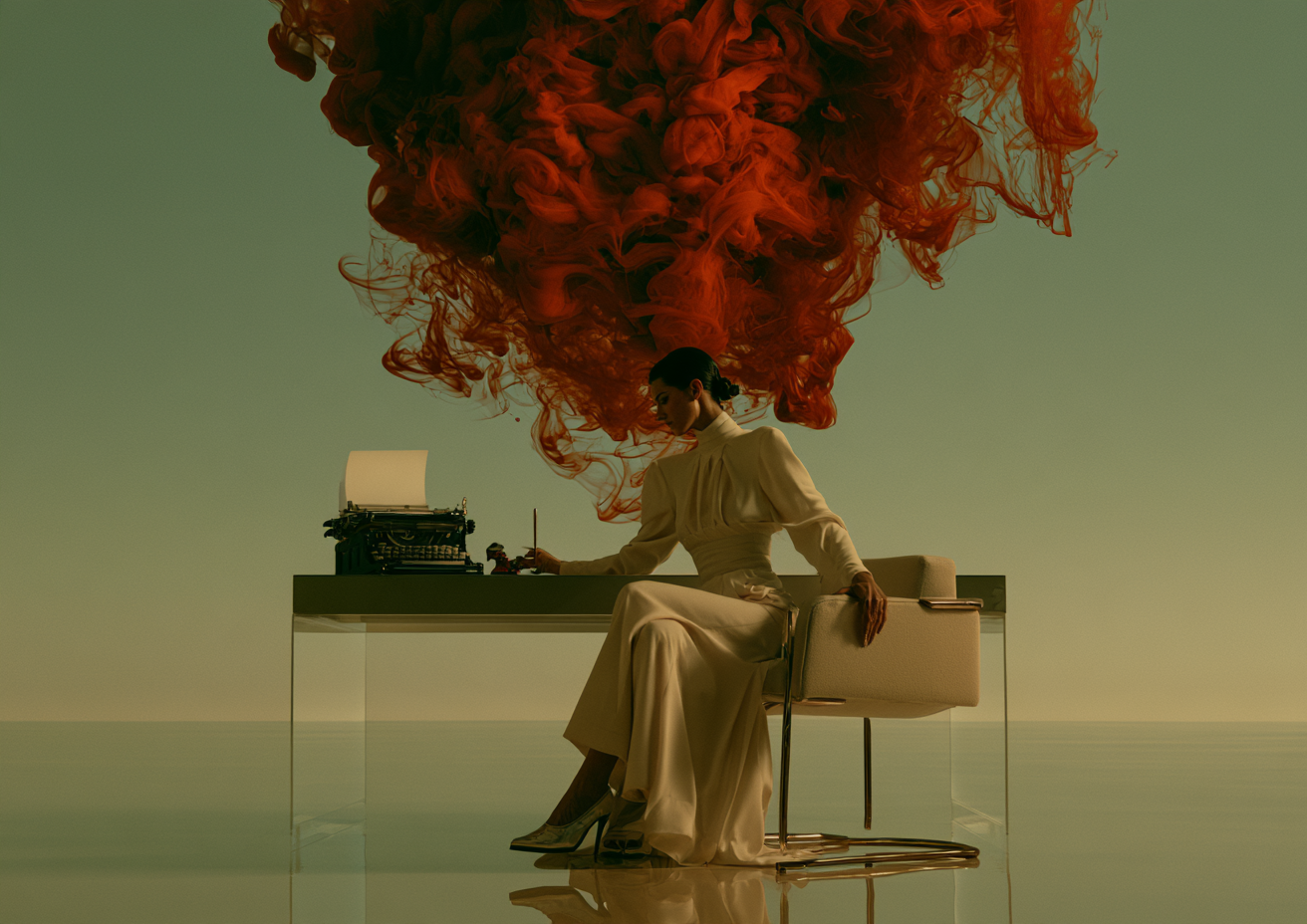
We overlook the imagination it takes to translate ideas into words for the AI
Generating an image can be remarkably easy. Anyone with a subscription can type a few words, hit Enter, and watch an image appear. But viewers see only the result we post, not the imagination, decisions, or experimentation behind it. Perhaps we need to make more of that process visible.
Prompting can involve translating imagination into words and trade language. Writing has long been part of artistic practice, though a prompt is not a screenplay. An experienced art director brings judgment a newcomer may not yet possess, and not every generated image is an artistic achievement.
Returning to the filmmaker’s comment, particularly those two words: ‘just’ and ' creative '. His criticism might reflect concerns about artistic labor, originality, or the technology itself. Those concerns deserve consideration, I will acknowledge. What I question and do not accept is how quickly criticism of a tool becomes a final judgment about the imagination of the person using it.
Sidenote: I wrote this entire piece myself, using AI (thanks, Grammarly) as an editing tool for structure and grammar.
