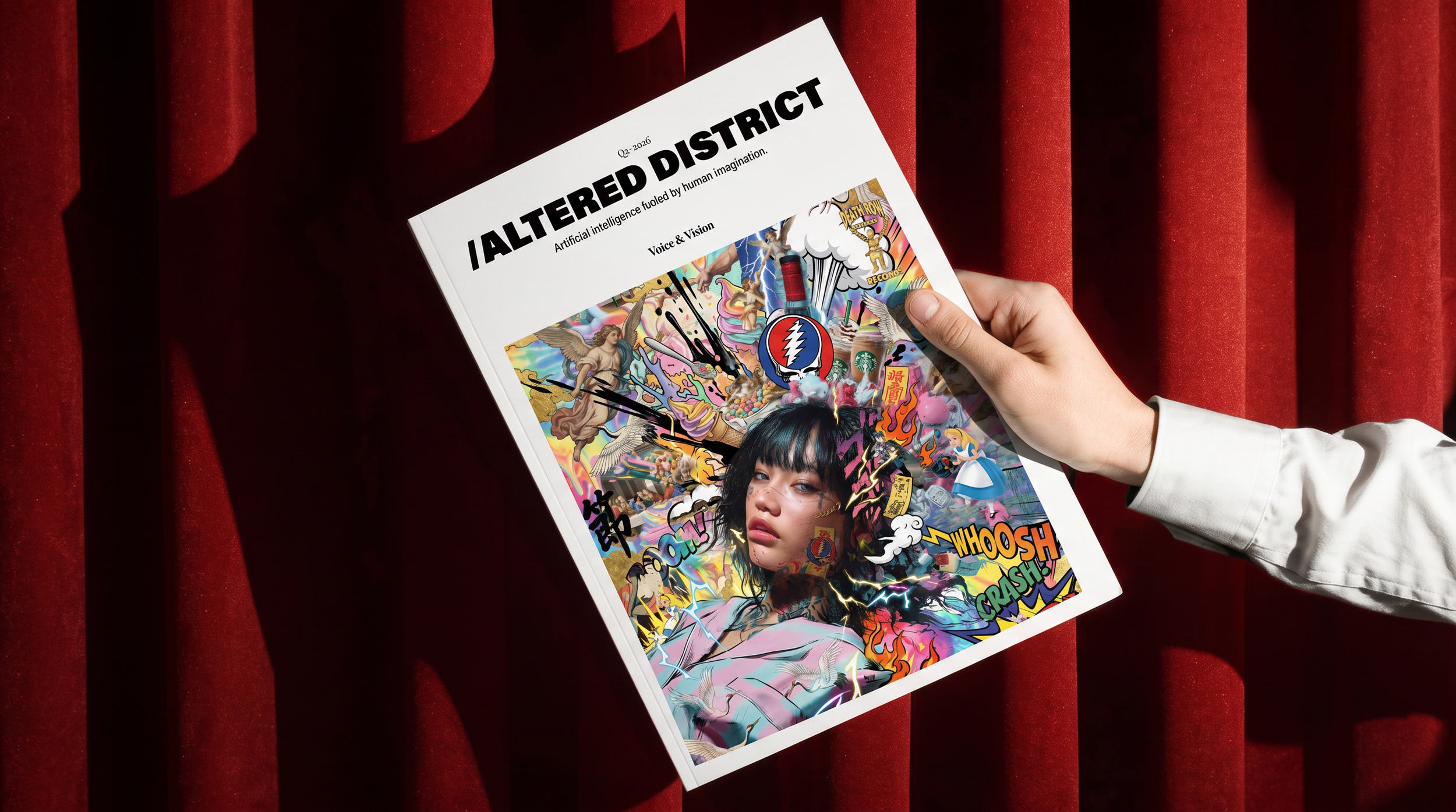
Notes from Curating and Creating /Altered District
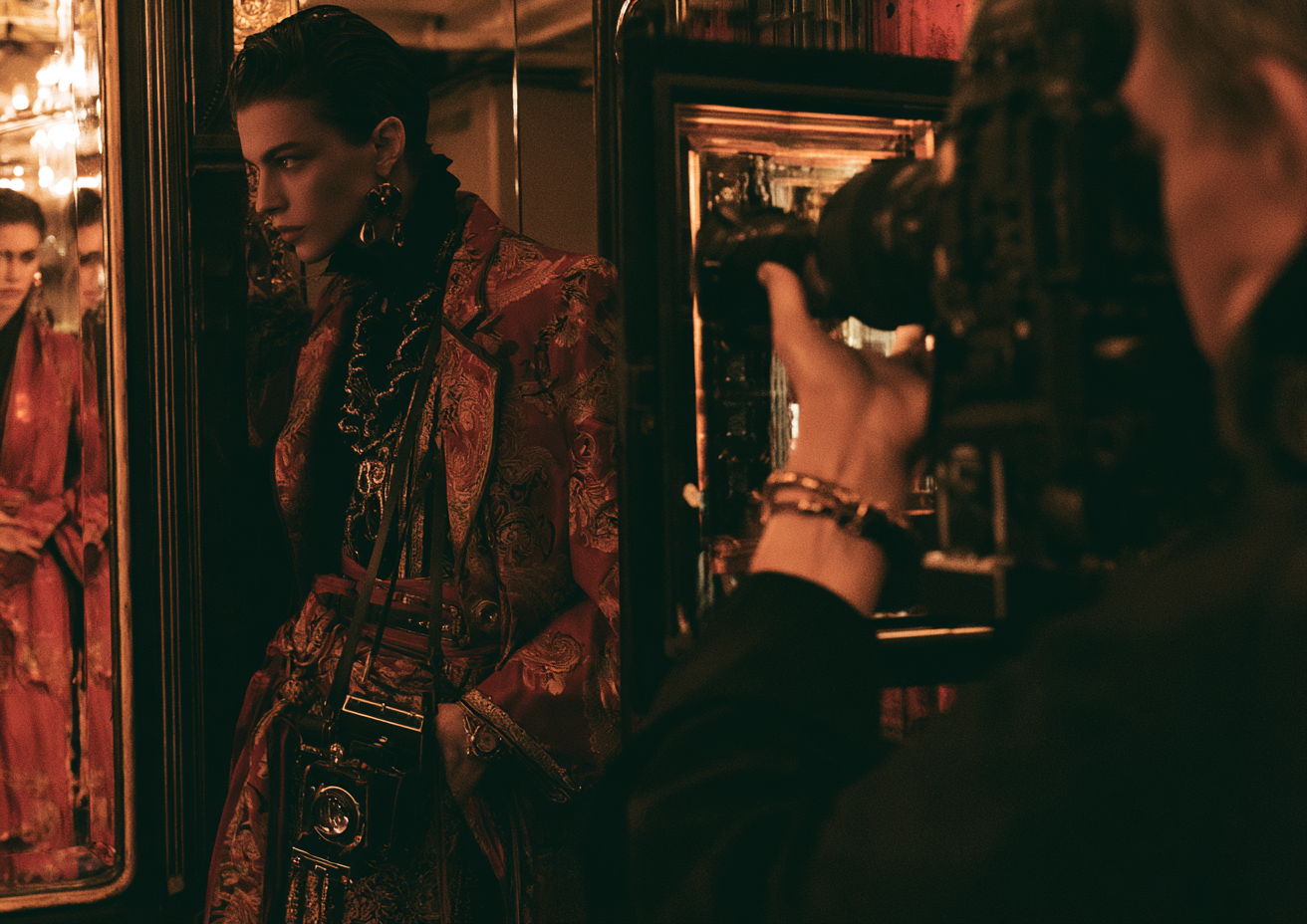
Something keeps happening when I look through the work of the creators we feature. I'm moving through a portfolio, and the images don’t match in terms of art direction. A film-soft portrait. A clean, minimal graphic. A surreal collage that should interrupt the continuity, but doesn’t. A piece of cinematic motion. Different worlds, same person. Every time, I do a double take.
For most of commercial art's history, that was a problem. A liability, even.
Traditionally, you often hire a photographer or an illustrator for the specific look they create. That signature style. For instance, a cosmetic company called Irving Penn because they wanted a Penn vibe. Because of that still, sculpted, unmistakable portrait. Then Bruce Weber would be considered for a swimwear brand. All for a Weber look, preferred for its sun and skin, which tells the story of the swimwear ad campaign. There are also illustrators like KAWS. A KAWS look fit a younger audience. They needed those specific drips and the X-ed-out eyes. A style known as cool and different.
The style was the creator’s product and meant to be marketable. It was why a client went to them instead of the person one portfolio over.
Range often looked suspicious. A creative who could do anything is perceived as inconsistent. Has a hard time getting legitimate work.
Then creatives got their hands on generative AI.
Now a wave of creators has started moving freely between looks, genres, and media, still reading as unmistakably themselves. That is an emerging trend I’m seeing.
What changed
People want to say the generative AI made everyone more versatile. That’s too shallow an assessment.
What generative AI removed was the barrier to production. Those costly budgets and that needed to be justified. The crews. The studio rental, the lighting setup time, the location scout, etc. Not to mention the years it took to master one machine well enough to charge for it.
That production barrier did more than keep people out.
It forced a creative individual to pick one medium and stick with it. Learning the camera became life, and eventually a way to earn income. That creative became so good that a signature style emerged, followed by an on-demand reputation.
However, a word on the generative AI tools, because it matters. There is no magic button. The people doing this work run a stack. For example, you can start in Midjourney, then push the image toward realism in Nano Banana, and animate it with Kling. Photoshop hasn't gone away and can still be used as a finishing pass alongside everything else. The pipeline is real and layered.
However, the craft and imagination didn’t vanish.
What’s new is that one person can run the whole line alone, removing that barrier. They’re no longer contained. The jump between styles and art direction is starting to look like versatility. That versatility has always been the creator’s identity, but production barriers have held it back.
The honest part
There is an ugly version of this argument.
Creatives who can be fluid, who can jump styles, I can point to those with training.
Current art direction. Creative Directors. Graphic Designers. Even a few Advertising Executives. Of course, they can move between looks and stay coherent. Their eye was trained to. Suggesting that the self-taught can’t.
Wrong. Flatly wrong.
The formal training doesn’t grant permission to style-jump. Generative AI tools made it possible, and they did it for everybody all at once.
What a design education (including me as a design school alum) gives you is point-of-view development. We were taught to defend concepts, then withstand soul-crushing critiques and not to lash out.
It’s all about having a point of view. That’s it.
A point of view is not the private property of the credentialed. It’s a human’s instinct to explore and follow through. So does obsession. Self-teaching builds strong perspectives as well, because self-taught creatives never learned which rules it was supposed to bow to.
Trained creators are the clearest example, the easiest place to see the shift, because their range is documented and they can explain it.
But I prefer to give the credit to those who have a point of view. Never on the pedigree. The second you hand it to the diploma, you have rebuilt the exact gate this moment was supposed to knock down.
So what happens to the signature-style
Now the part that sounds like bad news. If a creator can move so freely that you would never guess two pieces came from one hand, how does anyone build a name?
I’ll make a prediction.
Here’s my observation so far: the signature style didn’t really disappear. It was a result of traditional modes of production and hiring. Generative AI steps in as the catalyst, giving creatives the freedom to express themselves in multiple ways.
In the commercial world, I think creatives’ portfolios will shift toward range, and range is now the new signature style. The portfolio stops saying "here's my style" and starts saying "here's my range, and here's the thinking that connects it." At that point, it’s up to the individual creator to market themselves with their range.
I also think that the commercial industry will change its hiring standards, perhaps hiring creatives with range. When execution gets cheap, that bar stops meaning anything. The new standard becomes: Why this?
Is that a bad thing? We’ll find out.
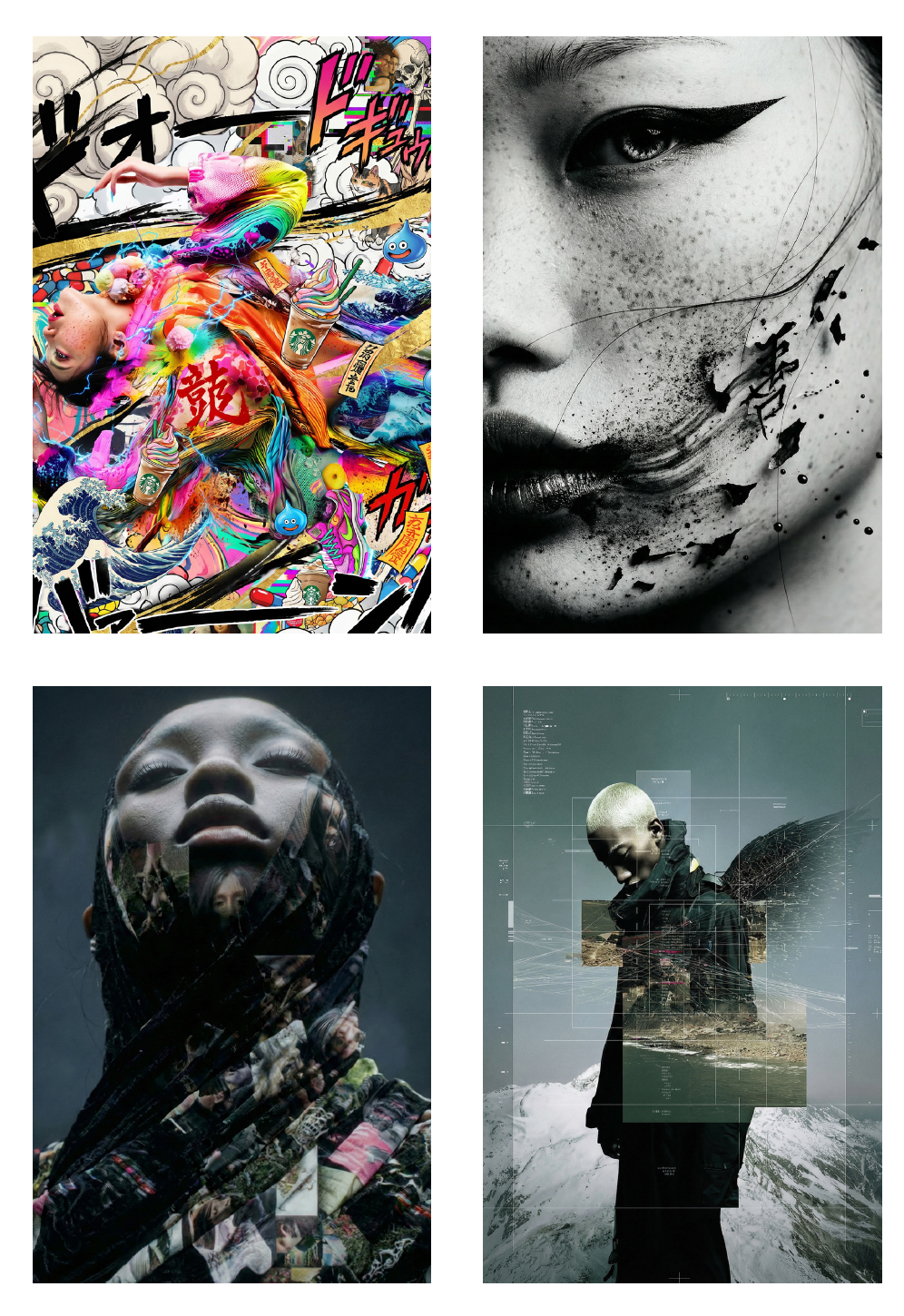
By Ikuo Yamamoto
From /Altered District’s Issue No. 2, there were two creatives I chose to highlight that depict this. That’s Ikuo Yamamoto and Andrea Riedel. Both have experience as commercial creatives, dealing with clients, briefs, and budget considerations.
Ikuo Yamamoto is a clean case. He might no longer be known for a single visual style, and, on the surface, the work seems varied. But it still reads as his, because each series is connected by a consistent point of view.
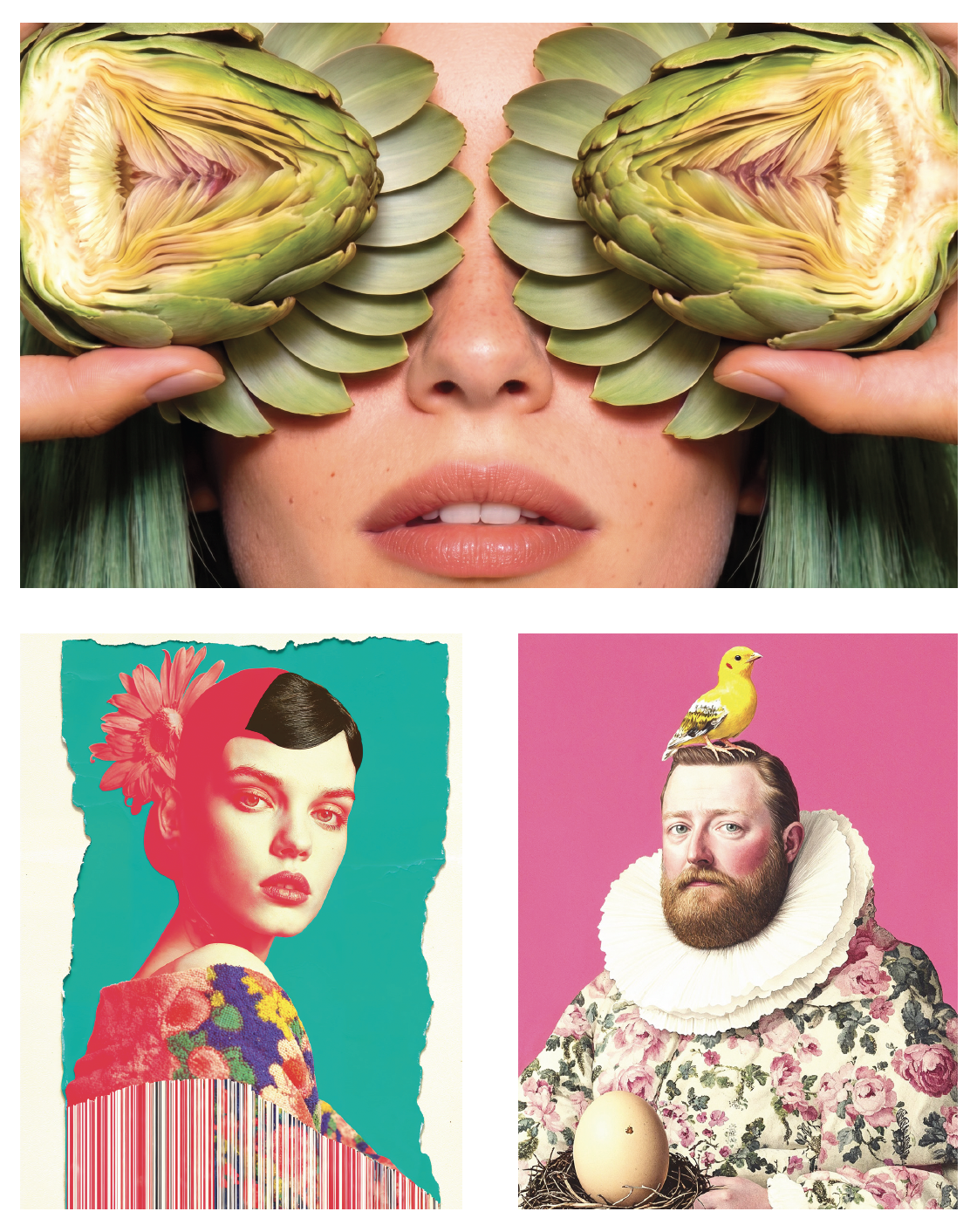
By Andrea Riedel
Andrea Riedel is the same case. She moves seamlessly among collage, portraiture, and fine art, challenging the idea that a creative has a single look. As I noted in the issue, perspective, not aesthetic consistency, can shape creative identity.
That is the migration I want to highlight. The creative voice is finally free to speak out, driven by their own curiosity and willingness to explore.
Read about it
If this is your corner of the world or top of mind, check out /Altered District, where I cover creators making things generative AI just made possible.
Issue No. 2, "Voice & Vision," featuring Ikuo Yamamoto, Andrea Riedel, and incredible work from self-taught creatives.
Available now in print and digital formats.